Friday, December 29, 2017

Sunday, December 24, 2017
No Room - Losing Focus During The Holidays
No Room!

Christmas had come – by that I mean the real meaning of this
season we celebrate had arrived. The Kingdom of God showed up at the door. What
door? The Inn-keeper’s door. We don’t know too much about this Inn-keeper in
Scripture; only that he informed Mary (the mother of Jesus) and Joseph (Mary’s
husband) that there was “No Room” at the Inn.
The most important guest (ever) to arrive at an inn
(throughout all history) arrived at Bethlehem Inn only to be told by the
manager “No Room”. Isn’t that the tragedy of our day? So many of us have said
the same thing in one way or another “No Room for you God”. And especially
during the hustle and bustle of the Christmas season, commercialism, gift giving,
tradition and religion has taken the place of the real meaning of the season.
The order of the day in regards to Christ is “Sorry, No Room For You”. I pray
this does not describe you.
Saturday, December 23, 2017
Can We Engage Our World Through Christian Apologetics?
Apologetics & The
Present Culture

Our generation does not embrace the Christian worldview as
wholeheartedly compared to recent generations. As early as the 1960’s, Craig
suggests that a contributing factor was the rise of atheist philosophers
(Craig, 94). As the context of the question suggests “the atheists are striking
back vigorously since the 9/11 attacks”. Apologist and author Ravi Zacharias
has painted a vivid picture of the decline of our culture over the last few
generation: He states that it is commonplace in our society that Christianity
is attacked. “It is rampant” he says. “Unbelievers once revered the church, and
its teachings, but today they scorn them. Films such as the Da Vinci Code and
organizations such as The Jesus Seminar attack the credibility of Jesus and the
Bible”. It is to this decline in a God-influence that Apologetics plays a very
important role.
I really believe that at the heart of all this is the
strategy of the enemy of God to win the hearts and minds of men, women, boys
and girls. It is an attempt to suppress the reality of God and give license to
all that the mind of men can conceive. The Bible states that the will of God is
that men (the just) shall live by Faith (Romans 1:17). The Bible also describes
the strategy of the enemy as a great exchange – God has revealed Himself to
mankind, but their hearts became dark, they became fools (saying there is no
God), leading to the exchanging of “the truth of God for a lie” (Romans 1:
18-25). Apologetics is needed to combat this rampant wave of attacks from the
atheists, agnostics and secularists in our society who wish to silence the
voice of absolute truth.
Friday, December 22, 2017
Saturday, December 16, 2017
For My Friend Who No Longer Believes In God (Hypothetical)
I Have Lost My Faith In God!
A Letter To My Friend
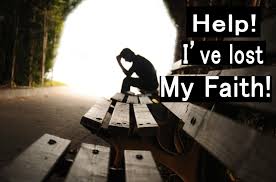
A Letter To My Friend
Dear Lloyd,
How
are you my friend? Hoping this letter finds you in peace today. I am so happy
that you reached out to me with your concern. This is significant. Actually,
this is major – a big deal! For your concern deals with life and death. Still,
you’ve come a long way and I hope to encourage you on this Faith journey.
I see you have concerns about the existence of God – that you
see no evidence to support your Faith. I am sorry to hear that. I pray by the
end of this letter to have given you just a bit of information that may help
you with the answers you seek. I know you are a reasonable person, so let’s see
where the evidence leads. I know you have read the Bible before and in it you’ll
find proof of God’s existence, but I’d like to address your concerns from a different
angle.
Without a doubt, one of the best-known arguments for the
existence of God is that of the “Moral Argument”. Over your many years of life,
I am sure you realize that something inside of you differentiates between good
and evil, right and wrong. This is called Objective Morals. These are “values
we hold dear that guide our lives” (Craig, 172). If we start here, whether or not
you agree, there are some things that are just wrong, and it is so “independent
of what people think or perceive” (Craig, 173). Take robbing a store – If you
decide to do this, already you know that such an act is wrong. While there are
written laws on the books that punish such an act (confirming that robbing a
store is wrong), your conscience will tell you “Lloyd, this is wrong”. Tied up
in this Moral Argument are moral duties and moral values. Moral duties are
concerned with that which is right or wrong, while moral values concern that
which is good and bad (Craig, 172). During the time in which you had Faith, you
surely can remember an internal compass guiding your behavior. You relied on
that which was greater than you for discernment. That internal compass is God.
Here’s what philosophers call an ontological foundation in
support of the existence of God through the existence of moral values:
Wednesday, December 13, 2017
2015 State of Atheism in America - Barna Group
2015 State of Atheism in America - Barna Group: This past year, Barna Group studied the unchurched—those who have not attended church within the past six months. Among the key findings, one of the most remarkable is that unchurched people are not always unbelievers: they just haven’t been to church in a long time. But what about atheists and agnostics? Are their numbers on the rise?
Why America’s ‘nones’ left religion behind
Why America’s ‘nones’ left religion behind: With the percentage of U.S. adults who do not identify with a religious group growing, we asked these people to explain, in their own words, why they left.
Tuesday, November 28, 2017
The Sin Struggle
A Daily Walk: To Sin Or Not To Sin

What happens to the individual who becomes a Christian? Is
there an instant cessation of sinning? Is there mastery of addictions? What of
the effects of sin – are they erased? John Frame in his excellent presentation
on Presuppositional Apologetics (213) provides us with an excellent insight on
the issue at hand. He says “No. Becoming a Christian does not immediately erase
all sin and its effects”. You see, God forgives our sins, but we will not be
perfect till we get to heaven. Christians will sin. But we can choose not to:
8 If we say we have no sin, we deceive ourselves, and
the truth is not in us. 9 If we confess our sins, he is faithful and just to
forgive us our sins and to cleanse us from all unrighteousness. 10 If
we say we have not sinned, we make him a liar, and his word is not in us. (1 John 1:8-9)
The journey is a lifetime of pursuing Christ and His
righteousness. We still struggle to overcome temptations and we still commit
sin, both with the mind and the body. It is God who deals with all sin as He “forgives
our noetic sins in Christ” (the nature of unbelief that affects our reasoning
and knowledge, disobedience to God’s words). Frame describes the Christian as “regenerate,
born again and a new creation: “Therefore, if anyone is in Christ, he is a new
creation. The old has passed away; behold, the new has come” (2 Corinthians
5:17). So how is the believer different from the unbeliever?
Saturday, November 25, 2017
The Bible as an historical document
Can we trust the Bible?

The foundation of the Christian faith is belief in Jesus Christ – His birth, life, death and resurrection. The Christian believes in obtaining righteousness through faith in Jesus Christ; that he or she is sanctified in Christ Jesus by His calling (1 Corinthians 1:2). Therefore, the words of Christ upon which this faith relies must be trustworthy, and Christ has made it so. The words of the Bible are supported by eyewitness testimonies (first hand, recognized by scholars) and the revelation of His deity and resurrection; by manuscripts attesting to the Bible’s claims; by historical sources (confirmed by credible historians), not the least of which are historians from the first and second century. Christ ensured His claims are never left without a witness.
We also see throughout the Scriptures God making the claim that the words thereof are “inspired or God breathed” (2 Tim. 3:16-17) and that He is speaking (Gen. 1:3; Lev. 26:2b). Not to mention the fact that He supports His own existence through miracles. Surely such a God would make provisions for claims and attacks against His word. Jesus told His disciples His words are life (John 6:63) and Paul affirmed that the mysteries of God were not left up to chance but carefully given to Apostles and Prophets to record for the benefit of all (Eph. 3:1-5). The words of God are trustworthy, it is men that reject it.
Tuesday, November 21, 2017
Subscribe to:
Posts (Atom)